

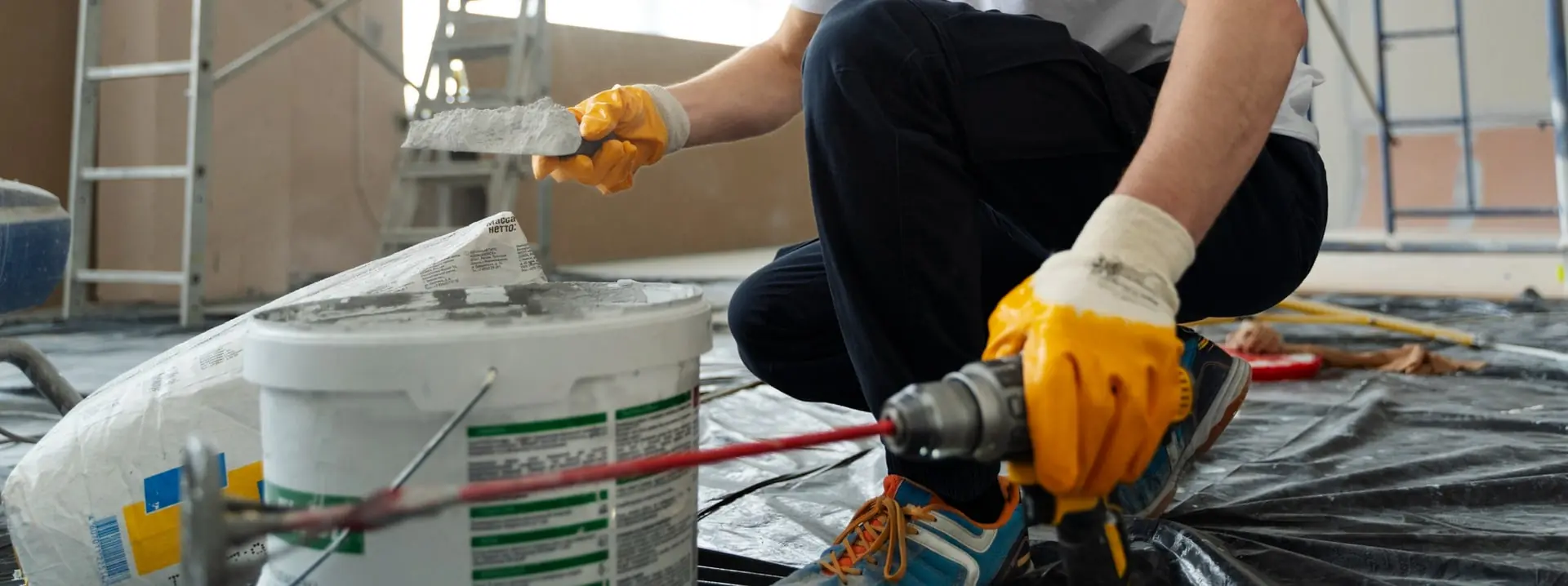
House renovation in Birmingham and the West Midlands
Ecobuild manages full and partial house renovations across Birmingham and the West Midlands, including structural alterations, plastering, flooring and decoration.
Renovations and refurbishment
Renovation work can involve structural alterations, repairs, plumbing, electrical work, plastering, joinery, flooring and decoration. Ecobuild assesses the overall requirement, divides larger projects into practical stages and coordinates the appropriate teams.
What’s included
- Strip-out of existing finishes, fixtures and fittings
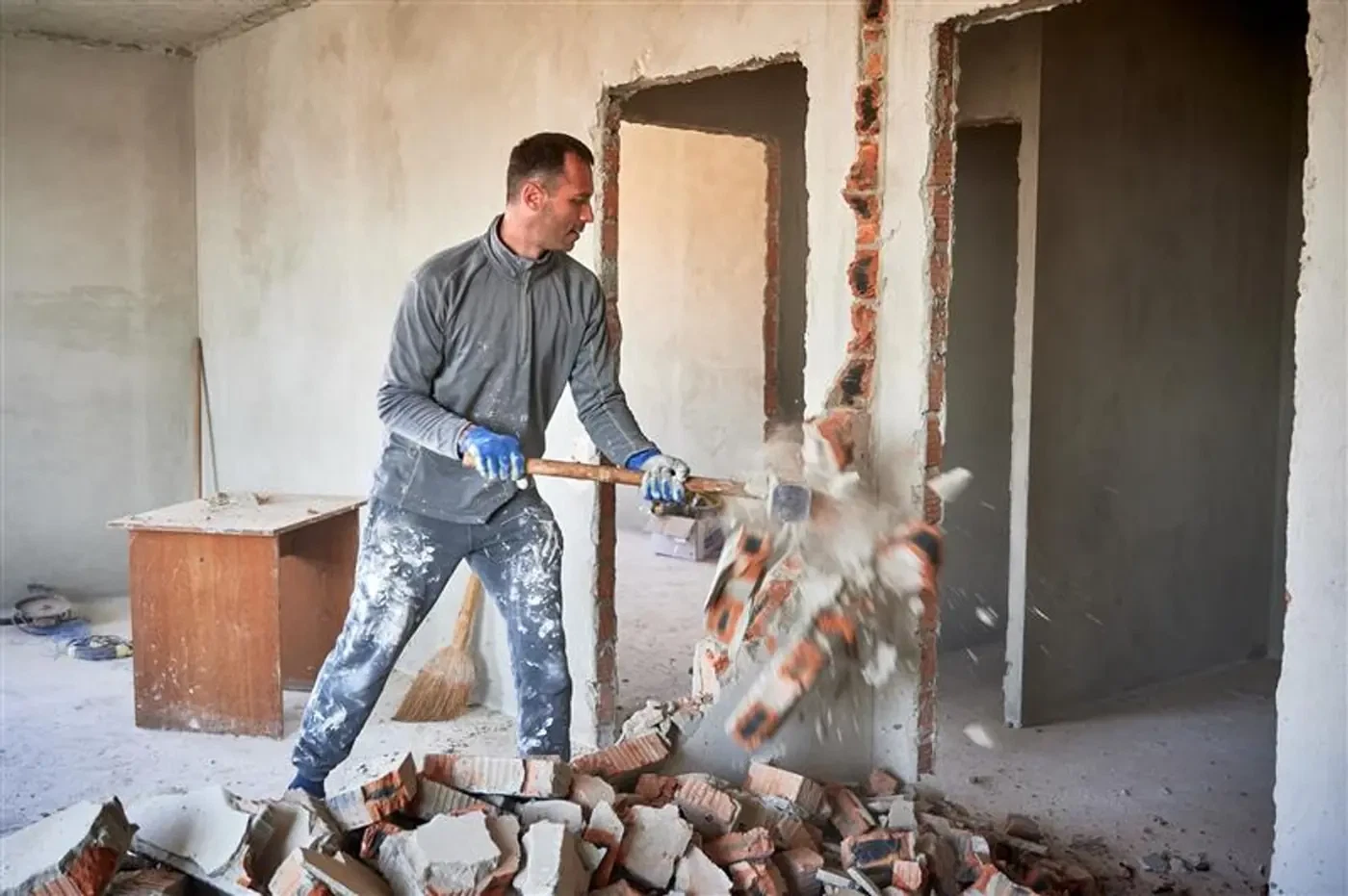
- Structural work: removing internal walls, installing steel beams
- Damp investigation, damp-proof course renewal and tanking
- Full re-plaster of walls and ceilings
- Coving, skirting, architrave and internal doors
- Decoration of walls, ceilings and woodwork, and flooring
- Waste removal throughout

If your job includes electrical work, we explain before quoting who will carry it out and how it will be certified. Notifiable electrical work must be done by an electrician registered with a competent person scheme, or approved through Building Control.
Ready to start your project?
Tell us what needs doing and where. We will review it and explain the next step. Nothing is agreed until you accept a written quotation.
Renovation work in Birmingham and the West Midlands
We establish intended outcomes, existing condition and likely risks before detailed quotation.
Larger refurbishments are split into clear stages so decisions and sequencing stay practical.
You contract with and pay Ecobuild. We manage communication, agreed scope and written variations throughout the project.
About renovations and refurbishment
What a renovation covers
A renovation is a set of jobs that have to happen in the right order, which is why doing them through one company is cheaper than doing them one trade at a time. Plaster goes on after the wiring. Flooring goes down after the plaster is dry. Decoration is last.
Depending on the property, that can mean anything from one room brought back into use to a whole house stripped and rebuilt internally.
- Strip-out of existing finishes, fixtures and fittings
- Structural alterations, including removing internal walls and installing beams
- Damp investigation, damp-proof course renewal and tanking
- Rewiring and replumbing, and moving services
- Re-plastering walls and ceilings
- Joinery: skirting, architrave, internal doors and fitted storage
- Flooring in wood, tile or carpet
- Decoration throughout
- Waste removal at every stage
How we manage a renovation
The order of work is the part that goes wrong when nobody owns it. This is how we run it.
- A survey first. We look at the property before pricing it, because the things that change a renovation budget are behind the plaster, under the floor and above the ceiling.
- A written quotation that separates essential repairs from improvements, so you can see what has to happen and what you are choosing to do.
- A sequence of trades, planned so nobody is waiting on anybody and nothing finished gets damaged by the next trade in.
- Changes agreed in writing before any extra cost. Nothing chargeable goes ahead on a conversation.
- A walk round at the end, with you, so anything you are not happy with is raised while we are still on site.
Renovating older homes
Older houses are not worse, they are different, and they punish assumptions. A survey on a period property is looking for specific things.
In Victorian and Edwardian terraces: solid walls with no cavity, so insulation has to be dealt with from one side or the other; lime plaster that does not like cement repairs; suspended timber floors where the air bricks have been blocked up or the joist ends have gone; and a damp-proof course that may be bridged by raised ground or a later render.
In 1930s semis: cavity walls, often with the ties corroding; original single-skin bay roofs; and rewiring that has been extended rather than replaced. Chimney breasts removed by a previous owner without the stack above being supported are a recurring find.
In post-war and later housing: concrete floors, flat roofs over additions, and additions built without Building Regulations sign-off. We would rather find that at survey than at completion.
Damp: find the cause before the cure
Damp is a symptom. Treating it without finding the source is the most expensive mistake in a renovation, because the plaster comes off twice.
Rising damp comes up from the ground and shows as a tide mark low on the wall. It needs the cause dealt with, which may be a bridged or failed damp-proof course rather than the course itself.
Penetrating damp comes in from outside, through failed pointing, a cracked render, a blocked gutter, a leaking downpipe or a roof detail. It usually appears after rain and in one place.
Condensation is the most common of the three and the most often misdiagnosed. It shows in corners, behind furniture and on cold surfaces, it comes with black mould, and it is a ventilation and heating problem rather than a waterproofing one. Tanking a wall that has condensation on it moves the problem rather than solving it.
We will tell you which of the three we think you have, and what we would do about it, before you spend anything on plaster.
Landlords, agents and empty properties
Work on a rental or an empty property is a different problem from work on a home: the clock is money, the specification should favour repairability, and the handover needs paperwork.
On a void we will sequence the work so the property comes back into use as early as it sensibly can, and tell you plainly which parts cannot be rushed. On an occupied tenancy we will work around access and give you the dates to pass on.
We specify for wear rather than for show, and favour fittings whose parts can be sourced again in two years, so a repair is a repair and not a replacement.
What affects the price
- What is behind the plaster. Wiring, pipework, structure and damp are the four that move a renovation budget most, and none of them is visible when quoting.
- How much is structural. Removing a wall, installing a beam or supporting a chimney breast is a different order of work from finishes.
- Whether the property is occupied. Working around a family living in the house is slower than working in an empty one.
- The specification. The same room can be finished several ways, and we will show the difference rather than assume.
- Access and storage. Somewhere to put a skip and materials is worth more than people expect, especially on a terrace.
- How much is being done at once. Doing a whole floor in one go costs less per room than doing the same rooms separately over two years.
Common questions
Can we live in the house while it is being renovated?
- Often yes, depending on which rooms are affected, whether there is a working kitchen and bathroom, and what stage the work is at. We will talk through the practical options early, including the periods where staying is genuinely difficult, so you can plan rather than find out.
Do you deal with damp?
- Yes, and we start by working out which kind it is. Rising, penetrating and condensation look similar on a wall and need completely different work. We will tell you what we think the cause is before anything is replastered.
Will my renovation need Building Regulations approval?
- Parts of it probably will. Structural alterations, new or altered drainage, electrical work, new windows and anything that changes how a room is used are the usual triggers. Redecoration and like-for-like replacement generally are not. We will tell you what applies to your job before you accept a quotation, and you are the applicant unless the quotation says otherwise.
Do you renovate commercial premises?
- Yes. Shops, offices and units are the same trades with different constraints, usually around keeping the premises in use, working outside opening hours, and fire and means of escape requirements. Tell us how the building is used and we will plan around it.
Where should we start if the whole house needs doing?
- With the things that keep water out and the structure sound: roof, gutters, pointing, damp and anything moving. Those protect everything you spend afterwards. Kitchens, bathrooms and decoration come after, and we will set that order out in the quotation rather than leaving you to guess it.
One
Contract with Ecobuild
Written
Quotations and exclusions
Agreed
Changes before extra cost
Homes
Landlords and commercial
Ready to discuss your project?
Send your renovation brief and we will review the property needs and project approach with you.
If something is not right after we finish, tell us and we will come back and inspect it. See our terms and conditions for how this works.
