

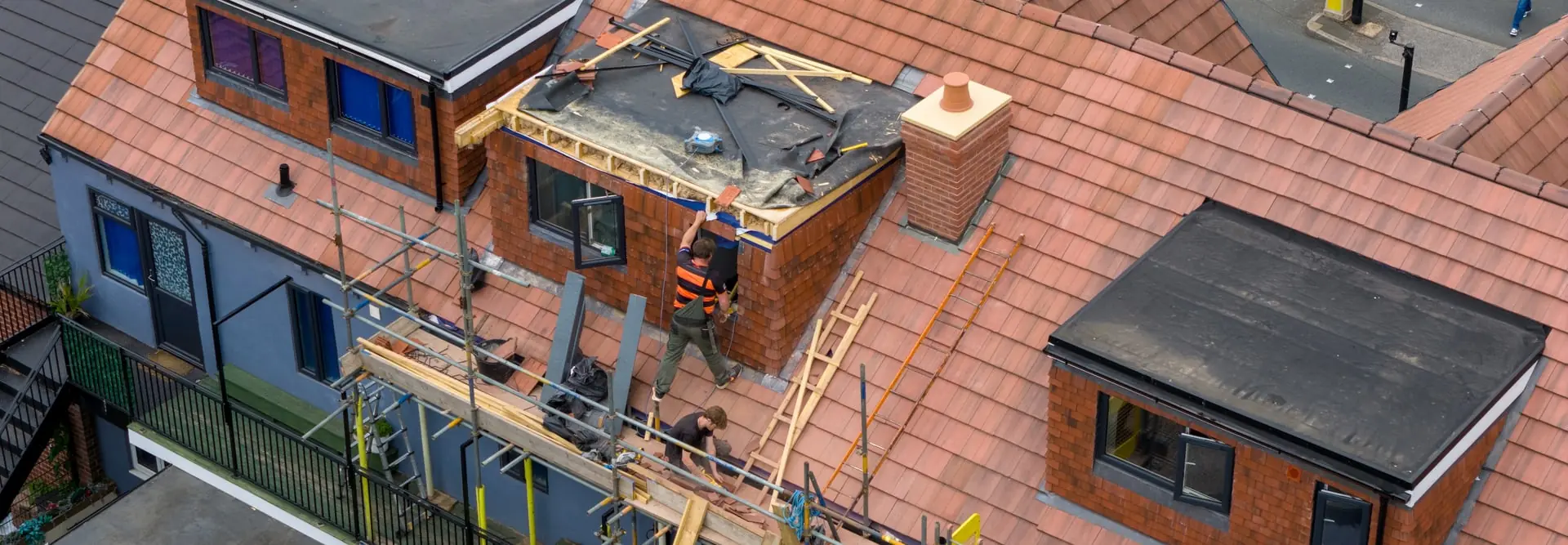
Roofers in Birmingham and the West Midlands
Ecobuild carries out and manages roof repairs and replacements across Birmingham and the West Midlands, on pitched and flat roofs, planned work and leaks alike.
Roofing specialists
Roofing and leak enquiries range from an isolated defect to extensive renewal. We review what you send us, assess how urgent it is, and arrange either the most suitable available team or a site visit.
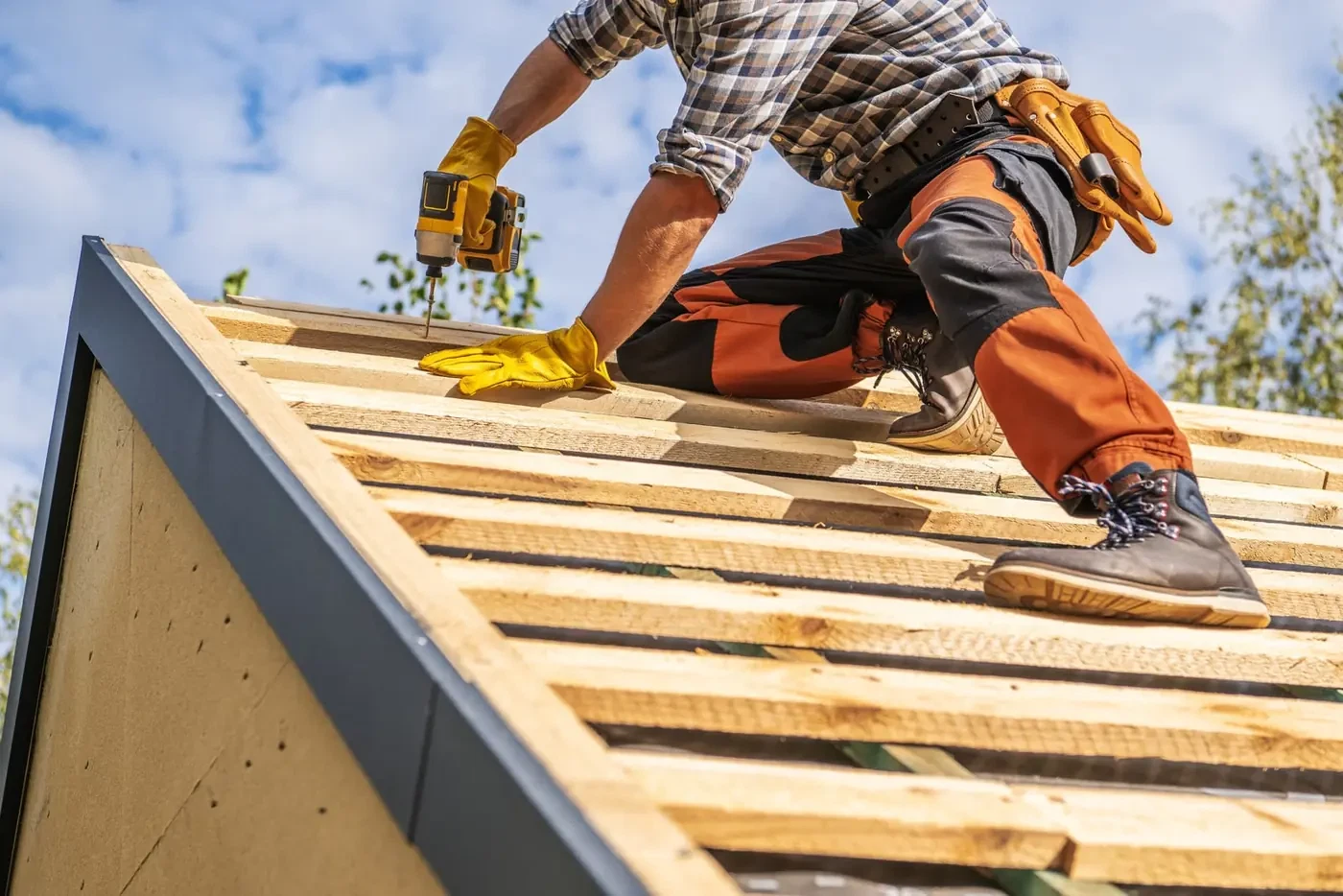
What’s included
- Full roof replacements, pitched and flat
- EPDM and GRP flat roof systems
- Leak investigation and emergency repair
- Chimney repointing and lead flashing
- Guttering, fascias and soffits
- Roof leak enquiries assessed and the most suitable available team arranged

Ready to start your project?
Tell us what needs doing and where. We will review it and explain the next step. Nothing is agreed until you accept a written quotation.
Roof repairs and replacements in Birmingham
We prioritise cause-led leak assessment so repair or replacement decisions are based on condition and risk.
Quotations define included works, exclusions and any areas that depend on opening-up findings.
You contract with and pay Ecobuild. We remain your point of contact and agree any additional costed work in writing before it proceeds.
About roofing and repairs
What our roofing work covers
We work on pitched and flat roofs, on houses and on commercial buildings. Some jobs are one slipped tile or a failed length of flashing. Others are a full strip and re-cover.
We look at what is actually failing before pricing anything. A patch on a roof at the end of its life is money spent twice, and we would rather say so.
- Full roof replacement, pitched and flat
- EPDM rubber and GRP flat roof systems
- Leak investigation and repair
- Chimney repointing and lead flashing
- Valleys, ridge and verge
- Guttering, fascias and soffits
- Commercial and unit flat roofs
Do you have a leaking roof?
Deal with the water and the electricity first, then tell us. If water is near lights, sockets or the consumer unit, switch off the electricity at the consumer unit if you can do it safely, and stay out of that area.
Move what you can out of the way and catch drips with buckets or towels. Take photographs from inside, and from the ground outside if it is safe to do so.
Do not go onto the roof, and do not go into a loft space that is wet. More people are hurt falling through a ceiling or off a ladder than are hurt by the leak.
Send the photographs with your enquiry. A picture of the ceiling stain and one of the roof from the ground usually tells us more than a description, and it often tells us which part of the roof to look at first.
Why roofs leak where they do
Water rarely enters where it appears inside. It runs along a batten, a rafter or a ceiling joist before it drops, so the stain can be a metre or more from the hole.
On pitched roofs the usual points are slipped or cracked tiles, failed mortar at the ridge or verge, lead flashing that has lifted where the roof meets a chimney or a wall, and valleys blocked with debris so water backs up under the tiles.
On flat roofs the failure is usually at an edge rather than in the middle of the roof. The upstand, where the covering turns up against a wall or a kerb, is the first place to look: if the covering has pulled away or the trim above it has lifted, water gets in behind it. Laps between sheets, outlets that have silted up, and areas that pond because the fall is wrong are the others.
EPDM or GRP: which is better?
Neither is better in every case. They fail in different ways and suit different roofs.
EPDM is a rubber membrane, usually laid as a single sheet on a domestic roof. One sheet means no joints across the main area of the roof, which removes the most common flat-roof failure point. It stays flexible in cold weather and moves with the deck. It is less happy with regular foot traffic and with sharp edges.
GRP is glass-reinforced polyester, laid wet and cured in place, so it forms one hard surface with no seams at all. It takes foot traffic better, which matters on a balcony or where plant sits on the roof. Being rigid, it needs a sound, dry, well-supported deck, and it cannot be laid in wet or cold conditions.
In practice the deck beneath, the detailing at the edges and the standard of the work matter more than the choice between the two. We will tell you which we would use on your roof and why.
What affects the price of a roof repair
We price from what we can see and from what you tell us, and the quotation sets out what is included and what is not. These are the things that move the figure.
- Access. A low roof reachable from a ladder is not the job that needs scaffolding, and scaffolding is often the largest line on a roofing quotation.
- Height and pitch. A steep or high roof needs more edge protection and slows everything down.
- The covering. Plain tiles, concrete interlocking tiles, natural slate and fibre cement slate are not interchangeable, and matching an older covering can mean sourcing reclaimed material.
- How much underneath is sound. Battens, felt and the deck beneath are only visible once the covering is off.
- The details. Chimneys, valleys, dormers, abutments and rooflights each need their own flashing, and each takes time.
- What has to be taken away. Old roof coverings are heavy, and skip costs follow the weight.
- Repair or renewal. Repairing a roof with years left is sensible. Repairing one failing across the whole surface is not.
Roofing across Birmingham and the West Midlands
The local housing stock sets the roofing work. Victorian and Edwardian terraces in inner Birmingham typically carry natural slate at a steep pitch, with valleys and party-wall abutments that want lead rather than mortar.
The 1930s semis across Solihull and Sutton Coldfield usually have concrete interlocking tiles. They are heavy, and at this age the battens and felt beneath them have often gone even where the tiles look sound.
Post-war estates and later additions bring flat roofs over extensions, garages and bay windows, which is where EPDM and GRP come in. On exposed newer estates, ridge and verge mortar tends to give trouble before the tiles do.
Common questions
Should I repair or replace a flat roof?
- If the deck is sound and the failure is at one detail, repair it. If the deck is soft underfoot, holding water, or the covering has blistered across the surface, a repair buys months rather than years. We would rather lose a small repair than sell you one that will not last.
Do I need planning permission for a new roof?
- Replacing a roof covering like for like on a house does not usually need planning permission, but it does need to meet the Building Regulations that apply to it. Permission is more likely to be needed if you change the shape or the height of the roof, add dormers, or the property is listed or in a conservation area. We will tell you what your job needs before you accept a quotation, and you are the applicant unless the quotation says otherwise.
Will you need scaffolding?
- Often, yes. Anything beyond a short job at low level needs a proper working platform. That is a safety requirement rather than a preference, and we price it as its own line so you can see what it costs.
Do you work on commercial flat roofs?
- Yes. Warehouse, unit and small office flat roofs use the same systems at a larger scale, with more attention to outlets, upstand heights and keeping the building usable while the work goes on.
My roof was damaged in a storm. Can you deal with my insurer?
- We can assess the damage and give you a written repair quotation to pass to your insurer. We do not manage claims: the claim and the decision stay between you and them.
One
Contract with Ecobuild
Written
Quotations and exclusions
Agreed
Changes before extra cost
Homes
Landlords and commercial
Ready to discuss your project?
Send your roof details and we will review the issue and propose the most suitable next step.
If something is not right after we finish, tell us and we will come back and inspect it. See our terms and conditions for how this works.
